

Theoretical physicist Professor Bill Yeung explains how physics is everywhere

Professor Yeung says scientific research, particularly in fundamental areas, is mainly driven by curiosity. He finds real joy in tackling new questions, solve problems, and expanding his understanding of nature.
Professor Bill Yeung Chi-ho is currently a Professor in the Department of Science and Environmental Studies. He holds a Bachelor of Science in Physics and Mathematics, a master’s degree and a PhD in Physics.
Prior to joining EdUHK, Professor Yeung worked as a postdoctoral research fellow at the University of Fribourg in Switzerland and Aston University in the United Kingdom. His main interests in scientific research include statistical physics, spin glasses and disordered systems, transportation networks, optimisation problems, routing, recommendation systems, complex and social networks, explainable artificial intelligence (AI) and deep artificial neural networks. Professor Yeung also carries out research in the field of education, with a special focus on STEM education and the application of AI in education. Alongside his work in science and education research, Professor Yeung is committed to teaching and teacher training. He received the President’s Award for Outstanding Performance in Teaching from EdUHK in 2017, and has been heavily involved in training both in-service and pre-service teachers in STEM education. He took on his new role as Dean of Students in August 2024.
In this issue of FLASS FORWARD, Professor Yeung shares his current research projects, what keeps him motivated to work on fundamental research in statistical physics, and just what he finds so joyful about being a theoretical physicist.

Professor Yeung emphasises the importance of sparking curiosity and enthusiasm in students by showing how science and technology impact people’s lives through practical, real-world applications.
A1: I study the nature of various complex systems in the physical world and the application of complex systems in theories to solving problems. In physics, complex systems refer to arrangements made up of many interacting components, where the collective behaviour of the system cannot be easily inferred from the behaviour of its individual parts. These systems are defined by features like nonlinearity, adaptation, self-organisation, and feedback loops. Complex systems found in the natural world include the Earth's climate, living cells, and the human brain, where the whole is greater than the sum of its parts.
The study of complex systems in physics has significant applications in analysing transportation and social networks as well, which involves looking at interactions and relationships between individual components. In recent years, I have completed several research projects in the areas of transportation and social networks. For example, one study focused on how home-swapping could reduce overall commuting times in a city. Another project involved developing a simulation model to analyse the spread of COVID-19 within communities.
By bridging physics, science education, and other disciplines, I see myself as an interdisciplinary researcher centred on physics.
My main research work is concentrated on complex systems like spin glasses and disordered systems, which falls within the field of conventional physics. I am also involved in education-related research, including AI for education and STEM education. As a physicist, I try to bring together research in science and education by applying the methodologies used in physics research to problems in education. By bridging physics, science education, and other disciplines, I see myself as an interdisciplinary researcher centred on physics.

Professor Yeung believes the purpose of STEM education goes beyond simply equipping students with critical thinking, problem-solving, and analytical skills for understanding today’s world, it is about inspiring a genuine interest in science and technology.
A2: If you want to spread a message efficiently in a social network, like Linkedin or Facebook, you have to think about who should receive the message first. If there are superstars with a large number of followers in your network, they should get the message as they can spread it rapidly through their network of followers. This is obvious.
To devise the best message-spreading strategy, you need to understand the structure of the network and identify not just the superstars, but also the secondary and tertiary nodes who can help pass the message on. By leveraging the connections of these influential individuals, your message can rapidly reach a wide audience. The challenge is similar to a diffusion problem in classical physics, which deals with the movement of particles from areas of high concentration to areas of low concentration.
Let me give another example. I collaborated with Chinese mainland scholars and published a paper on the paths and timelines of disease transmission. The scholars had a two-week database of cell phone locations from about a third of a mainland city’s population, amounting to several million people. The database included detailed information about daily movements, such as the time people boarded transport, the time they arrived at a place, where they went for lunch, and how long they stayed at eateries, etc.
We ran a computer simulation to predict how, if one citizen caught a transmissible disease like COVID-19, the outbreak would spread. The simulation helps predict when and where the disease would spread, and which group of people would be most at risk. Our insights from the simulation showed that people who have regular contact with many others are most likely to contract the disease. The model helps public health professionals better understand patterns of transmission and develop strategies to slow the spread. The study shows the potential of using statistical physics models to tackle complex urban challenges.
A3: Imagine a bunch of tangled strings, called polymers in research, in a messy room. They represent a disordered system. We use maths and physics to describe how these strings interact, which helps us figure out the best ways to solve tricky transportation challenges.
To begin with, we design certain properties for these polymers, such as making them repel each other. This tendency to repel will determine the quickest route for each vehicle, while not blocking others. The model creates a simple and spread-out system that lets each vehicle choose its own best path, while at the same time avoiding traffic jams by considering the overall effects of vehicles. In essence, the model optimises the routes for each driver at the same time. Similar research ideas can help solve problems related to Internet overlay networks, travel on the London Underground, or even the global airport network.
The study suggests home-swapping can not only save overall travel time and ease congestion, but also reduce carbon emissions by cutting unnecessary travel.
Here is another example of how optimisation models help in real-life. Many city dwellers face long commutes because of traffic congestion. In one collaborative project, we used mobility data from a Chinese mainland city to see how home-swapping could help reduce long-travelling times. We found that a city-wide relocation could cut commuting times by as much as 50%. If home exchanges are limited to people with comparable socio-demographic profiles, the effect is less, but a 13% reduction in commuting time is still possible. The study suggests home-swapping can not only save overall travel time and ease congestion, but also reduce carbon emissions by cutting unnecessary travel.

In addition to fundamental scientific research, Professor Yeung also pursues projects related to teaching and learning.
A4: I’ve worked with local primary and secondary schools on several projects to see whether STEM (Science, Technology, Engineering, and Mathematics) education can help students develop a stronger interest in science and technology, and whether learning outcomes—as measured by mastery of basic scientific concepts and principles—improve through the school’s STEM curriculum.
I am also interested in how AI is integrated into learning, especially its application in local primary and secondary schools. For instance, I took part in a project initiated by an English teacher at a secondary school, where students used AI tools to help with essay writing. I helped analysing the data collected from students to assess the impact of AI on their writing ability.

The GPS system consists of a network of high-speed orbiting satellites, ground control stations, and receivers that work together to deliver precise location and time information anywhere on Earth.
A5: The drive to understand the fundamental principles behind the material world led me to choose theoretical instead of experimental physics for my PhD. Discovering new ways in which the world works is something I find fascinating. Even over a decade since completing my PhD, I still feel great joy in every new scientific discovery. That joy alone is enough to keep me going on the research journey.
Discoveries in theoretical physics might not bring immediate improvements to people’s lives but can lead to revolutionary changes for society.
Discoveries in theoretical physics might not bring immediate improvements to people’s lives but can lead to revolutionary changes for society. When Albert Einstein formulated his theory of relativity in the early 1900s, he probably did not consider its practical value. But today’s GPS technology relies on both special and general relativity to calculate time with great accuracy.
GPS, or the Global Positioning System, is made up of a network of high-speed orbiting satellites, ground control stations, and receivers that work together to provide exact location and time information anywhere on Earth. GPS works by triangulating signals from multiple satellites to determine the receiver’s position in terms of latitude, longitude, and altitude. For accurate positioning, the time data from the satellites has to be extremely precise. And this is where the theory of relativity comes into play.
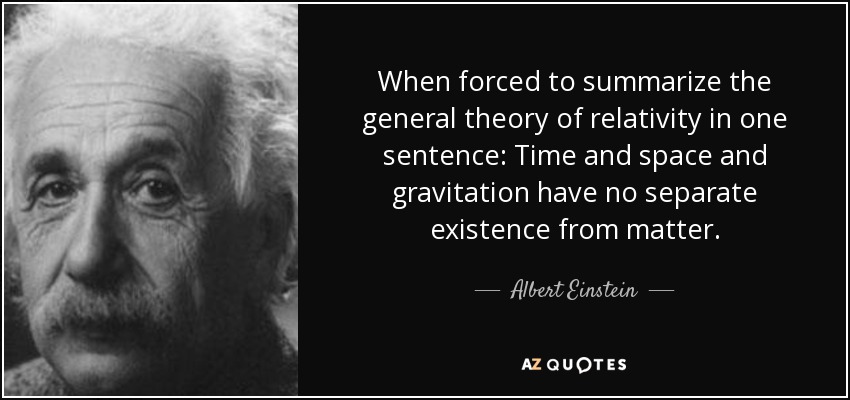
Einstein’s special theory of relativity says that an object moving at a significant fraction of the speed of light in space experiences time more slowly than people on Earth. His general theory of relativity adds that the relationship between speed and time is further complicated by gravity. It predicts that massive objects, like planets and stars, distort spacetime. Because of this, time passes more slowly in stronger gravitational fields, and a satellite clock situated far from Earth, where gravity is weaker, ticks faster than one on Earth.
For GPS to work accurately, it has to factor in the tiny effects, measured in microseconds, of speed and gravity on time as predicted by Einstein’s theory of relativity. Einstein probably was not bothered about whether his discoveries were useful in a practical way. But without his special and general relativity theories explaining how speed and gravity affect time, engineers would not know how to correct the tiny differences between GPS satellite clocks and clocks on Earth.
Today, no one would argue against the massive impact of GPS has on daily life. It is vital for accurate navigation in private vehicles and public transport. You use GPS to find your friends or locate a restaurant. GPS helps city planners and construction workers to design and build infrastructure more effectively. Emergency response and tracking systems rely on the precise positioning information provided by GPS. It is almost everywhere in our lives.
But when people use GPS, they are actually applying Einstein’s theory of relativity. Theoretical physics is not far from everyday life; it is woven into it.
For people who don’t know the story behind GPS, it’s unlikely they would associate it with Einstein’s scientific work, as the two may seem completely unrelated. But when people use GPS, they are actually applying Einstein’s theory of relativity. Theoretical physics is not far from everyday life; it is woven into it.

Mr Richard Yeung (second from left) expresses gratitutde to Professor Bill Yeung (far left) for mentoring him throughout his PhD journey. Richard says Professor Yeung helped him develop the strength to become a researcher in STEM education and a professional trainer in STEM technologies. Standing on the right is Dr Sun Daner, Associate Professor from the Department of Mathematics and Information Technology.
A6: I am genuinely passionate about fundamental research in computational science. When time allows, I like to be hands-on with research projects. However, due to my administrative workload, my own research time is limited. Supervising PhD students gives me a form of compensation instead. I enjoy working collaboratively with students. Even though, I don’t have the time anymore to work on a research project on a daily base, but discussions with my students give me new knowledge and inspire me to think about how to solve a problem. Working together with my students in solving problems is challenging but gives me great satisfaction.
I frequently ask my students why they choose to pursue a PhD or EdD, and urge them to keep an open –mind about problems. Two of my PhD students have already graduated. I am glad that both of them have become faculty members already: one at an UK university; and one at a local university. I still supervise two PhD students: Mr Richard Yeung is working on a project related to STEM education, and Mr Xu Zhiqi is on fundamental scientific research.

During an orientation activity, Professor Yeung (third from left) encourages students to step out of their comfort zones and enjoy their campus lives during their university studies. President Professor Lee Chi-kin is in the centre, next to Professor Yeung.

Professor Yeung talks with senior-year students to understand their career aspirations during an employer networking luncheon.
A7: I became the Dean of Students in August 2024. Student affairs is totally a new area to me. It has been more than one year since then and I still need to spend a lot of time to learn the matters.
I like teaching, and interacting with students. As Dean of Students, I constantly reflect on the meaning of education. I believe it is about guiding students to find their path, and I hope every new student will discover their aspirations at EdUHK and develop into a diverse talent with an international vision. The new position has expanded my horizon as it gives me more opportunities to foster a supportive campus environment and introduce activities that enrich student life. It also prompts me to view education development from the needs and perspectives of students.
A8: I consider myself a theoretical physicist. As a theoretical physicist, I’m fascinated by unravelling the mechanisms and principles behind physical phenomena. It is difficult to describe the joy of gaining a deeper understanding of real-world phenomena. In practice, my work involves developing mathematical models and using abstract theory to explain real-world phenomena and predict outcomes based on those models.

Professor Giorgio Parisi, winner of 2021 Nobel Prize in Physics, shows his Nobel Prize diploma. (Photo source: Nobel Prize Outreach. Photo: Laura Sbarbori)
One of the best pieces of news for me in recent years was Italian physicist Professor Giorgio Parisi being awarded half of the 2021 Nobel Prize in Physics for his groundbreaking research on spin-glass study (Note). He made major contributions to our understanding of spin-glass systems, especially through his theoretical framework describing their behaviour. The Nobel laureate, now at Sapienza University of Rome, was the PhD supervisor of my professor when I was a post-doctoral fellow in Switzerland..
Spin-glasses are classic disordered complex systems. Models and theories developed through research on spin glass are widely used in statistical physics, material science, biology, computer science, and neuroscience, reflecting their interdisciplinary nature. In statistical physics, spin glass models are used to study phase transitions and critical phenomena in disordered systems. While spin glass models help understand disordered materials for materials science research, biologists use these models to analyse complex interactions in biological systems. I have also conducted several studies related to this field over the past few years. Spin glass research represents a niche within statistical physics. I am both surprised and delighted that a Nobel Prize went to a scientist working in such a small area.
Professor Yeung contributed an article to previous issue of the newsletter to talk about the importance of scientific discoveries and the joy of studying physics. Read it and discover what makes physics so fascinating.

Scientific exploration often means investigating poorly understood phenomena through repeated observation, building mathematical models, carrying out experiments, and testing theories. Pushing the boundaries of physics, chemistry, biology, medicine, and more is how humanity deepens its grasp of the universe.
Note: The Nobel Prize in Physics 2021 was awarded to three physicists for their foundational work on complex physical systems. Half the prize went jointly to Professors Syukuro Manabe and Klaus Hasselmann for their pioneering research on the physical modelling of Earth’s climate, quantifying variability, and reliably predicting global warming. The other half was awarded to Professor Giorgio Parisi for discovering the interplay of disorder and fluctuations in physical systems from atomic to planetary scales.
